
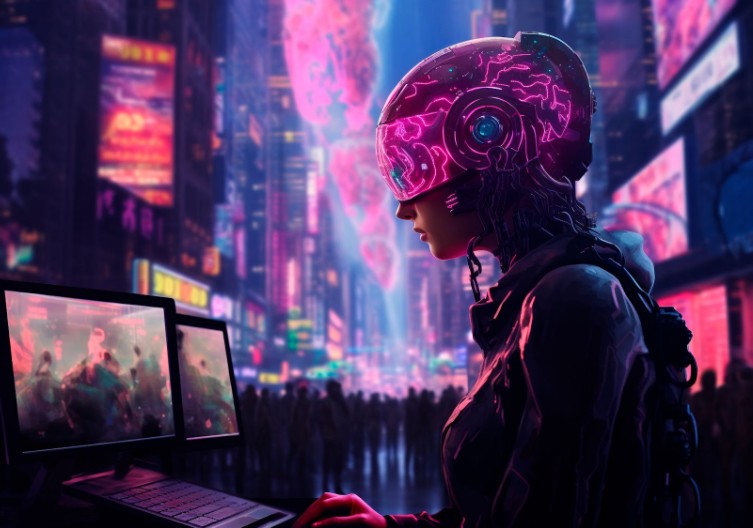
It should come as no surprise that colour forecasting and game prediction have developed into sophisticated, scientifically supported fields in a world where data-driven insights impact everything from purchasing patterns to climate predictions. Although colour trends and game outcome prediction may appear to be completely different at first, they are both based on behavioural analysis, data interpretation, and predictive algorithms.
Understanding Colour Forecasting
The process of projecting which colours will be in style in upcoming seasons is known as colour forecasting. This isn’t a guessing game. Instead, it combines historical data, consumer behaviour analysis, psychology, and worldwide trends.
In order to predict which colours will rule the market, organisations such as the Pantone Colour Institute use trend analysts who keep an eye on everything from political movements to art exhibitions. Fashion, interior design, and even digital product creation benefit from these insights by staying on top of trends.
Millions of people can relate to a basic hue of coral or teal depending on pop cultural references, societal emotions, and economic circumstances. That’s the power of predictive colour science: using emotional and visual cues to forecast what will appeal to people months or even years ahead.
The Parallel World of Game Prediction
Game prediction is equally data-intensive but serves a different purpose. It seeks to predict results in real-time contexts rather than influencing aesthetic choices. Powerful programs that leverage algorithmic insights, pattern recognition, and historical performance to improve the user experience include tools like 91 Club Apk and Sikkim APK.
These platforms offer more than simply entertainment; they are ecosystems where users may hone their analytical abilities, discover patterns in the past, and take advantage of an environment rich in data. What makes them particularly compelling is the personalisation aspect. The algorithms evolve based on user behaviour, refining predictions and creating a smarter interface over time.
Just as colour forecasters anticipate emotional responses to hues, game predictors analyse user preferences, decision-making trends, and statistical anomalies to create dynamic predictions. It’s a scientific process that combines creativity and logic in equal measure.
Emotional Resonance and Pattern Recognition
Both colour forecasting and game prediction hinge on emotional resonance and pattern recognition. In colour science, forecasters observe cultural shifts and societal moods to predict what colours people will gravitate toward. For example, a period of global uncertainty might lead to a surge in calming, neutral colours.
Similarly, game platforms like Jalwa Game Register use patterns in user activity and historical trends to predict future choices or outcomes. This isn’t just random chance; it’s about identifying the underlying rhythms in human behaviour and leveraging them for better experiences.
Incorporating these predictions into apps or platforms allows users to feel more engaged and understood. The colours in a UI or the dynamics in a game environment can make all the difference in how users perceive and interact with technology.
Data is the New Canvas
In both fields, data is the canvas on which future trends are painted. For colour forecasters, this might include sales numbers, Instagram trends, or socio-political movements. For game prediction developers, it’s user interaction data, choice architecture, and temporal patterns.
Platforms like Big Mumbai Lottery showcase this beautifully. Their interfaces often feature colour-coded cues, intuitive layouts, and easy navigation driven by what users subconsciously prefer. This is not accidental. These decisions are the result of meticulous data analysis and an understanding of how humans respond to visual and interactive stimuli.
In fact, many successful platforms regularly revise their colour palettes and interface mechanics based on predictive models. It’s a continuous loop of feedback, analysis, and improvement.
The Role of Technology in Prediction
Modern technology is at the heart of both disciplines. Big data analytics, machine learning, and artificial intelligence are essential tools for both game developers and forecasters. AI is capable of scanning millions of photos on the internet to identify new colour trends in the context of colour forecasting. It can track changes in preferences across geographies and demographics almost in real time.
Meanwhile, in game prediction, these technologies help apps like Sikkim Online Game and 91 Club APK learn and adapt to individual user behaviours. This leads to a more personalised and engaging user experience. Prediction is changed from a static process to a dynamic one that changes as the user does.
Users don’t need to be experts to take advantage of advanced forecasts when using platforms driven by such clever algorithms. Behind the scenes, the tech handles the hard lifting, which streamlines decision-making and raises user happiness.
Intersections and Inspirations
Though colour forecasting and game prediction serve different industries, they often borrow principles from one another. For instance, the design and interface of the Jalwa game register might be influenced by the latest colour trends identified by forecasting institutes. Similarly, predictive models in game platforms might inspire new methodologies in colour trend analytics.
The way these tools evolve demonstrates the connection between design, data, and decision-making. The science of prediction is as much about human psychology as it is about mathematics, as platforms get smarter, more user-friendly, and more aesthetically pleasing.
The Human Touch
The emphasis on the human experience is what really unites these fields. The ultimate objective is always the same, whether it’s creating a prediction engine that changes based on user input or selecting the ideal shade of blue for a new app interface: making life more connected, pleasurable, and intuitive.
This is well understood by websites such as Jalwa Game Register and Big Mumbai Lottery. They build spaces where users feel empowered and involved by fusing data, design, and emotion. As a result, science and art are seamlessly combined to reflect not just where we are but also where we are going.
Conclusion
Despite coming from distinct fields, the science of colour forecasting and game prediction has more in common than one might think. Both aim to comprehend human behaviour, foresee desires, and produce experiences that have a deeper meaning.
The accuracy and significance of these forecasts will increase along with technology, bringing us one step closer to a future in which intelligence and intuition coexist in the most vibrant way imaginable.
Explore one of these platforms now to enter the future of personalised prediction if you’re interested in getting a firsthand look at this developing synergy.